A Route 66 California road trip has extra significance in 2026 because the legendary highway is celebrating its 100th anniversary. The historic route opened in 1926 and connected Chicago with Southern California, eventually becoming one of the most recognizable road-trip symbols in the United States.
California contains the final stretch of the route, carrying travelers through desert landscapes, historic roadside communities, the Los Angeles area, and finally toward the Pacific Ocean in Santa Monica.
Although Route 66 was officially removed from the U.S. Highway System decades ago, much of its California story can still be explored. The key is to approach the trip as a historic journey rather than expecting one continuous modern freeway labeled Route 66.
How to Plan a Route 66 California Road Trip
The California portion works well as a multi-day trip because the landscape changes dramatically between the desert and coast. Trying to complete the entire route in a single day removes much of the reason to drive it in the first place.
Start with California’s desert section
For travelers entering California from Arizona, the landscape immediately establishes the classic Route 66 atmosphere. Long desert views, small settlements, railroad history, and preserved roadside landmarks create a much different experience from California’s better-known coastal highways.
Carry more water than you expect to need, keep the fuel tank comfortably above empty, and download maps before relying completely on mobile service. Summer temperatures can be extreme, while autumn and winter mornings may be surprisingly cool.
Give the desert enough time
It is tempting to treat the Mojave as the space between major destinations. However, slowing down is part of the appeal of a historic road trip. Old signs, architecture, diners, and remains of earlier transportation eras make more sense when you are not racing toward Los Angeles.
Drivers should also remember that historic alignments do not always function like modern interstate highways. Conditions can vary, so check local road information before using isolated stretches.
Follow Route 66 toward the Inland Empire and Los Angeles
As the route moves west, the scenery gradually becomes more urban. This transition is one of the most interesting parts of the California journey because Route 66 changes from an open desert highway into a corridor surrounded by communities that grew alongside automobile travel.
Ontario is especially relevant during the centennial year. Route 66 celebrations and car culture help connect the historic highway with the region’s present-day identity.
From there, travelers can continue toward communities associated with the old highway before reaching Los Angeles County. Allow extra time because traffic can become a much bigger factor than it was in the desert.
Do not plan the Los Angeles section by mileage alone
A distance that appears short on a map can take far longer than expected. Instead of setting an ambitious number of stops, choose several that matter most to you and leave room for traffic, parking, meals, and unexpected discoveries.
For accommodation ideas, browse our California hotel guides. Staying near the next day’s priority destination can reduce unnecessary driving.
Build food and neighborhood stops into the route
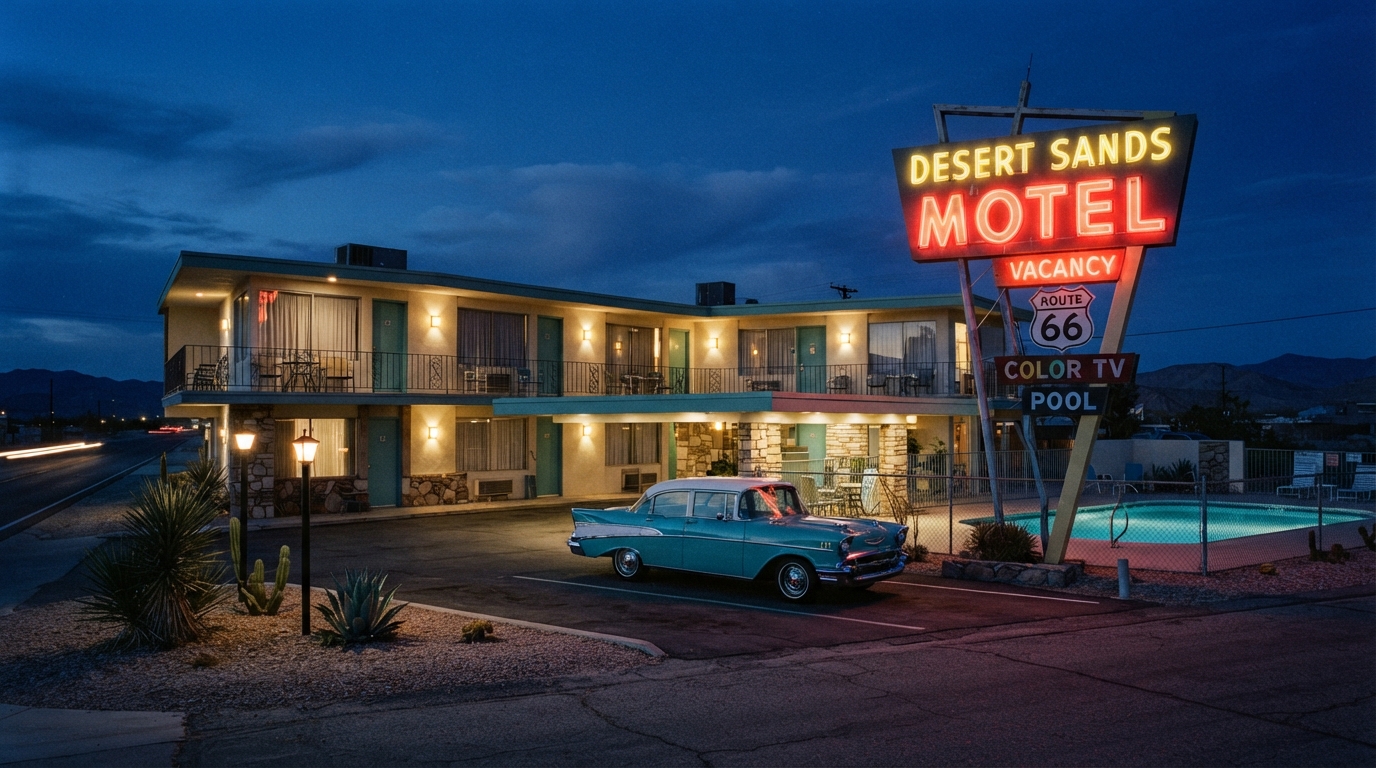
Route 66 is not only about pavement. Restaurants, local businesses, roadside architecture, and changing neighborhoods tell much of the story. Schedule proper meal breaks instead of treating food as something to grab between attractions.
This approach also makes the route feel less like a checklist. Some travelers may care most about vintage signs and cars. Others may prefer architecture, museums, photography, or food. The route can support all of those interests.
Finishing Route 66 at the California Coast
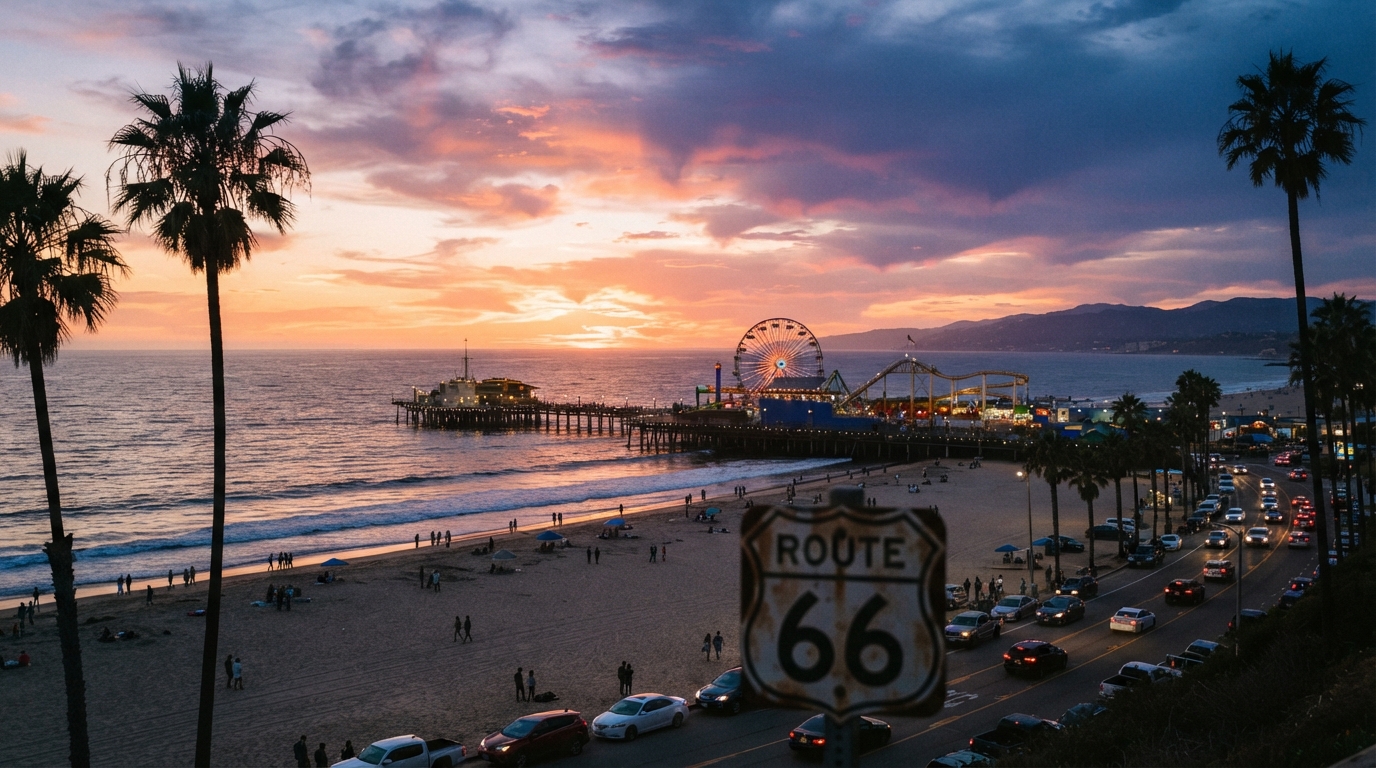
The contrast between the Mojave Desert and Santa Monica is what makes the California portion especially memorable. After hundreds of miles of dry landscapes, communities, and city streets, the journey ends beside the Pacific.
Make Santa Monica more than a photo stop
For many travelers, reaching Santa Monica is the symbolic conclusion to the Route 66 experience. However, arriving, taking one photograph, and immediately leaving misses an opportunity to enjoy the destination.
Consider staying nearby for the night. That allows you to walk the waterfront, watch sunset over the Pacific, have dinner, and finish the road trip without immediately returning to heavy traffic.
You can also extend your California trip by heading north toward Malibu and the Central Coast. Our Big Sur Highway 1 road trip guide can help if you want to connect two of California’s most recognizable driving experiences.
Travel the centennial route responsibly
Historic roads often pass through small communities rather than purpose-built tourist districts. Park legally, respect private property, support local businesses when appropriate, and avoid stopping in unsafe roadside locations simply for a photograph.
Before a long driving day, inspect your vehicle, confirm fuel stops, check weather and road conditions, and keep water available. Our Travel Smart section provides more California transportation and traveler-safety guidance.
The centennial makes 2026 a particularly meaningful year to drive Route 66, but the best trips will not be the fastest ones. Give the California section enough time to show its contrasts: desert silence, vintage roadside culture, dense urban neighborhoods, and finally the Pacific Ocean.
For additional road-trip ideas, explore our California road-trip guides and California destination guides.
For official centennial inspiration and statewide Route 66 resources, see the official California Route 66 centennial guide.